
Nissan Rogue 2025: Analyze Specifications, Pricing Ranges, and Real‑World Performance Metrics
Analyze the Nissan Rogue 2025 in depth through specifications, real fuel economy estimates, trim pricing ranges, and technical comparisons designed to support confident purchase decisions.
The Rogue strengthens its position in the compact SUV segment by focusing on measurable performance, efficiency data, and cost transparency.
Instead of radical redesigns, Nissan refines engineering elements that directly influence daily usability, fuel savings, and long‑term ownership stability.
Evaluate how the Subaru Impreza delivers consistent traction, controlled fuel consumption, and mechanical reliability.
Rogue engine architecture and output figures explained 🔧
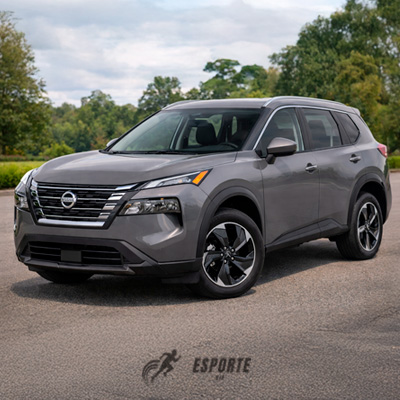
The Nissan Rogue 2025 uses a 1.5‑liter turbocharged three‑cylinder engine developed with variable compression technology.
This powertrain is designed to balance output consistency with reduced fuel consumption under different driving loads.
Maximum power output reaches approximately 201 horsepower at 5,600 rpm, while peak torque is rated near 225 lb‑ft at 2,800 rpm.
These figures place the Rogue among the strongest in its class for low‑end torque, improving urban acceleration and highway merging.
Engine mapping favors smooth delivery rather than aggressive throttle response, reducing stress on internal components and supporting durability over extended mileage cycles.

Rogue transmission and drivetrain technical breakdown ⚙️
Power is delivered through an advanced Xtronic continuously variable transmission.
For the Nissan Rogue 2025, Nissan revised gear ratio simulation to reduce high‑rpm behavior and improve linear acceleration.
Front‑wheel drive remains standard, while an intelligent all‑wheel‑drive system is available on select trims.
The AWD system dynamicAlly distributes torque based on wheel slip detection, improving stability during rain, snow, and uneven surfaces.
This drivetrain configuration prioritizes efficiency while maintaining adequate traction for varied U.S. road conditions.
Fuel economy numbers and efficiency metrics ⛽
Fuel economy is a central technical strength of the Nissan Rogue 2025. EPA‑estimated ratings indicate competitive efficiency for both FWD and AWD configurations.
Estimated consumption figures:
- City: approximately 30 mpg (FWD)
- Highway: approximately 37 mpg (FWD)
- Combined: approximately 33 mpg (FWD)
AWD versions typically show a combined average near 31 mpg, reflecting minimal efficiency loss considering added traction capability.
These numbers translate into measurable fuel cost savings over a standard ownership cycle.
Acceleration, handling, and braking data 🚦
In controlled testing scenarios, the Nissan Rogue 2025 records a 0–60 mph acceleration time close to 8.0 seconds, aligning with segment expectations.
Torque availability at low rpm improves drivability in stop‑and‑go traffic.
Steering response is tuned for predictability, while suspension geometry favors ride comfort over aggressive cornering.
Braking performance remains stable, with four‑wheel disc brakes delivering consistent stopping distances during repeated use.
This setup supports confident everyday driving rather than performance‑oriented behavior.
Rogue interior dimensions and cargo capacity metrics 📐
Interior packaging in the Nissan Rogue 2025 is optimized using precise dimensional planning. Passenger space supports both comfort and practicality.
Key interior measurements include:
- Front legroom: approximately 43.3 inches
- Rear legroom: approximately 38.5 inches
- Cargo capacity (rear seats up): about 36.5 cubic feet
- Maximum cargo capacity: up to 74.1 cubic feet
These figures position the Rogue competitively for families, commuters, and drivers requiring flexible storage.
Nissan Rogue 2025 technology hardware and display specifications 📊
Technology hardware in the Rogue is defined by screen size, processing speed, and interface clarity.
Higher trims include a 12.3‑inch digital instrument cluster paired with a 12.3‑inch central infotainment display.
Lower trims typically feature an 8‑inch touchscreen, maintaining essential functionality without excessive cost.
System response times are improved through updated processors, reducing lag during navigation and media transitions.
Wireless smartphone integration and over‑the‑air update capability enhance long‑term software relevance.
Nissan Rogue 2025 safety systems performance data 🛡️
Safety engineering in the Rogue combines sensor‑based assistance with structural integrity.
Nissan Safety Shield 360 remains standard, incorporating multiple radar and camera inputs.
Active safety features include automatic emergency braking, pedestrian detection, lane intervention, and blind‑spot correction.
These systems operate within defined thresholds to support the driver without excessive intervention.
Structural crash optimization improves energy absorption during frontal and side impacts, reinforcing occupant protection metrics.
Understand how Hyundai Elantra cost changes depending on trim level, and financing structure so you can plan your purchase.
Nissan Rogue 2025 trim levels pricing ranges and value analysis 💰
Pricing structure for the Rogue reflects trim differentiation and drivetrain configuration.
While exact dealer pricing varies, estimated MSRP ranges offer useful benchmarks.
| Trim Level | Estimated MSRP (USD) |
| S (Base) | $28,000 $29,500 |
| SV | $30,000 $32,000 |
| SL | $35,000 $36,500 |
| Platinum | $37,000 $39,000 |
Nissan Rogue 2025 technical specifications summary table 📋
| Specification | Data |
| Engine | 1.5L Turbo 3‑Cylinder |
| Horsepower | ~201 hp |
| Torque | ~225 lb‑ft |
| Transmission | Xtronic CVT |
| Drivetrain | FWD / AWD |
| Fuel Economy (Combined) | 31–33 mpg |
| Seating Capacity | 5 |
Why the Nissan Rogue 2025 delivers measurable ownership value 📈
The Rogue demonstrates value through quantifiable metrics rather than abstract promises.
Fuel efficiency, competitive horsepower, and well‑balanced dimensions create a cost‑effective ownership profile supported by predictable maintenance requirements.
Insurance premiums and resale values align with segment norms, while Nissan’s nationwide service network contributes to consistent long‑term reliability for U.S. drivers.
Evaluating the Nissan Rogue 2025 through a data‑driven ownership lens 🚘
Evaluating the Rogue through specifications and numbers highlights its strengths as a rational, efficient compact SUV.
Instead of prioritizing extreme performance, Nissan delivers balanced engineering supported by measurable outcomes.
This approach results in a vehicle capable of meeting daily transportation needs with clarity, consistency, and confidence, making it a practical choice for buyers who trust data.
FAQ ❓
- What engine does the Nissan Rogue 2025 use?
- It uses a 1.5‑liter turbocharged three‑cylinder engine with variable compression technology.
- How much horsepower does it produce?
- Output is approximately 201 horsepower with strong low‑rpm torque delivery.
- What is the estimated price range?
- Pricing generally ranges from the high $20,000s to high $30,000s depending on trim.
- Is all‑wheel drive available?
- Yes, AWD is available on select trims for improved traction.
- How fuel‑efficient is the Nissan Rogue 2025?
- Combined fuel economy averages between 31 and 33 mpg depending on configuration.
