
Master Strategic Decision-Making With an Artificial Intelligence Leadership Course
Explore how an artificial intelligence leadership course helps executives align AI strategy with business goals, ethics, and long-term organizational growth in the U.S. market.
Unlike technical programs, an artificial intelligence leadership course is designed to help professionals think clearly about AI, and guide teams through transformation responsibly.
The goal is not to turn leaders into engineers, but to turn them into confident, informed decision-makers.
View Core Strategic Frameworks Taught in an Artificial Intelligence Leadership Course 🧠
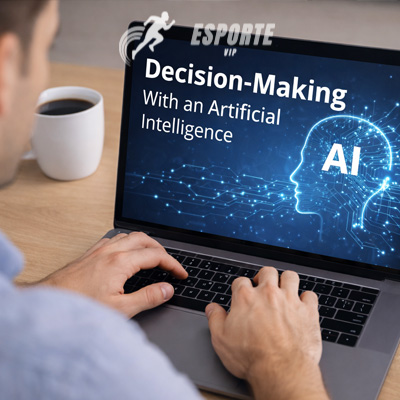
A high-quality AI course teaches structured frameworks that leaders can repeatedly apply across projects and departments.
Common strategic frameworks include:
- AI readiness assessment models
- Cost-benefit and feasibility analysis
- Data maturity evaluation
- Risk and bias identification
- Governance and accountability structures
These frameworks allow leaders to assess AI initiatives before committing resources.
Decision Discipline in AI Adoption ⚙️
One of the most valuable lessons in an artificial intelligence leadership course is learning restraint. Leaders gain tools to recognize situations where AI adds complexity without proportional benefit.
This discipline prevents waste and improves strategic focus.
Discover Executive Skills Developed Through an AI course 🎯
Beyond AI concepts, these programs strengthen high-level leadership capabilities essential in complex environments.
Participants typically develop:
- Strategic thinking under uncertainty
- Technology-aware leadership judgment
- Cross-functional communication skills
- Ethical reasoning and accountability
- Change leadership in digital transformation
These competencies remain relevant regardless of specific AI tools or platforms.
Leadership Skill Development Table 📈
| Skill Area | Executive Impact |
| Strategic AI literacy | Better investment decisions |
| Risk awareness | Reduced operational exposure |
| Ethical oversight | Stronger trust and compliance |
| Communication | Alignment across teams |
This is why the AI course is increasingly viewed as executive education, not technical training.
Who Benefits Most From an Artificial Intelligence Leadership Course 🏢
The AI course is designed for professionals who influence strategy, budgets, and people.
Primary audiences include:
- C-level executives
- Senior managers
- Product and innovation leaders
- Business strategists
- Consultants and advisors
- Public-sector leaders
These roles share responsibility for decisions that shape organizational direction.
Industry Applications of AI Leadership Skills 🌐
AI leadership knowledge applies across sectors such as:
- Finance and insurance
- Healthcare systems
- Retail and supply chains
- Manufacturing and logistics
- Government and education
In each sector, leadership determines how responsibly and effectively AI is deployed.
Learn Business Outcomes Driven by an Artificial Intelligence Leadership Course 💼
Organizations led by AI-literate leaders outperform those relying solely on technical teams.
An AI course improves how companies plan, govern, and scale AI initiatives.
Typical organizational outcomes include:
- Higher success rates for AI projects
- Better alignment between business and technology
- Reduced regulatory and reputational risk
- Faster decision cycles
- More sustainable innovation
These outcomes justify investment in leadership-level AI education.
Organizational Impact Comparison Table 📊
| Organization Type | AI Outcome |
| Tech-driven, leader-led | Structured and scalable |
| Tech-driven, leader-detached | Fragmented and risky |
| Leader-informed AI strategy | Balanced and resilient |
The artificial intelligence course directly influences this difference.
Artificial Intelligence Leadership Course vs Other Executive Programs ⚖️
Executives often compare AI leadership education to MBAs or general digital transformation courses. Each serves a different purpose.
Executive Education Comparison Table 📋
| Program | Primary Focus | Best Use Case |
| MBA | Broad management | General leadership |
| Digital transformation | Technology adoption | Process optimization |
| AI leadership course | AI strategy and governance | AI-driven decisions |
For leaders facing AI-specific decisions, the artificial intelligence leadership course delivers targeted value.
Ethical Governance and Risk Management in AI Leadership 🛡️
Ethical oversight is a central pillar of any leadership course. AI systems can unintentionally amplify bias, reduce transparency, and create legal exposure.
Leaders learn to address:
- Bias in data and models
- Explainability requirements
- Regulatory compliance
- Accountability structures
- Responsible AI deployment
This knowledge protects organizations while preserving innovation.
Long-Term Career Value of an Artificial Intelligence Leadership Course 🌱
Professionals with AI leadership credentials gain long-term advantages in the U.S. job market.
Career benefits include:
- Stronger executive credibility
- Expanded strategic influence
- Increased leadership mobility
- Relevance in AI-driven industries
An artificial intelligence leadership course signals readiness for future leadership challenges.
Leading Organizations Through AI Without Losing Control 🚦
AI introduces speed, scale, and complexity. Without leadership literacy, these forces can overwhelm organizations.
An artificial intelligence leadership course gives leaders the structure to guide transformation intentionally rather than reactively.
By understanding AI strategically, leaders maintain control over direction, ethics, and value creation. This balance is what separates sustainable innovation from costly experimentation.
Leadership, not technology, ultimately determines AI success.
FAQ ❓
- Is an AI course meant for non-technical leaders?
- Yes, it is designed specifically for decision-makers without coding backgrounds.
- Does a leadership course focus on tools or strategy?
- It focuses on strategy, governance, and decision-making rather than tools.
- How does an artificial intelligence course reduce business risk?
- It improves oversight, ethical awareness, and evaluation of AI initiatives.
- Can this type of course support executive career growth?
- Yes, AI-literate leaders are increasingly valued in senior roles.
- Is an artificial intelligence leadership course relevant across industries?
- Yes, AI leadership skills apply wherever AI affects operations or strategy.
