
Benefits of Artificial Intelligence as a Structural Advantage in the Digital Economy
Examine the benefits of artificial intelligence by looking at how learning algorithms, data feedback loops, and adaptive systems create sustainable advantages.
The benefits of AI emerge most clearly when AI is viewed as an enabling infrastructure rather than a standalone tool.
Artificial intelligence reorganizes how information flows, how decisions are validated, and how value is produced.
In the U.S. economy, AI functions as a structural accelerator, compressing time, reducing uncertainty, and expanding analytical capacity.
Understand how an artificial intelligence leadership course equips leaders to evaluate AI investments, manage risk, and drive innovation.
Artificial Intelligence as a System for Continuous Learning 🔁
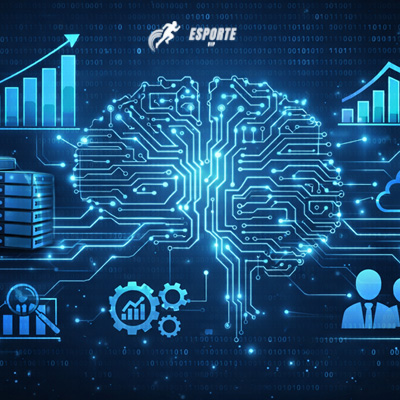
One of the most powerful benefits of AI is its capacity for continuous learning. Unlike traditional software, AI systems improve performance as they process more data.
This learning behavior enables:
- Feedback loops that refine outputs over time
- Adaptive responses to changing environments
- Self-optimization without manual reprogramming
- Accumulation of institutional knowledge
Continuous learning allows organizations to evolve faster than static competitors.
Decision Compression and Speed Enabled by AI Systems ⚡
Decision latency is a major constraint in complex systems. The benefits of artificial intelligence include compressing decision timelines without sacrificing accuracy.
AI supports faster decisions through:
- Real-time data ingestion
- Automated scenario comparison
- Probability-weighted recommendations
- Early detection of anomalies
This capability is critical in finance, logistics, cybersecurity, and operations.
Artificial Intelligence and Cognitive Load Reduction 🧠
Another key among the benefits of artificial intelligence is reducing cognitive overload for human operators. AI handles high-volume analysis so humans focus on judgment and strategy.
Cognitive relief occurs via:
- Automated pattern recognition
- Summarization of complex datasets
- Prioritization of actionable insights
- Decision support interfaces
This improves both productivity and decision quality.
Operational Resilience and Error Containment Through the Benefits of Artificial Intelligence 🛠️
AI enhances system resilience by detecting and containing errors early. The benefits of artificial intelligence include improved fault tolerance and risk management.
Resilience mechanisms include:
- Continuous monitoring of processes
- Predictive maintenance alerts
- Automated fail-safes
- Early warning systems
These features reduce downtime and systemic risk.
Artificial Intelligence in Resource Allocation and Optimization 📊
Resource misallocation is costly. The benefits of AI include dynamic optimization of resources based on real-time constraints.
| Resource Type | AI Optimization Effect |
| Capital | Better investment timing |
| Labor | Smarter task distribution |
| Energy | Reduced waste and peaks |
| Inventory | Demand-aligned stocking |
Dynamic allocation improves efficiency without sacrificing flexibility.
Artificial Intelligence as a Driver of Scalable Innovation 🚀
Innovation traditionally requires time and experimentation. Among the benefits of artificial intelligence is accelerating innovation cycles.
AI-driven innovation includes:
- Simulation of thousands of scenarios
- Automated experimentation and testing
- Discovery of non-obvious relationships
- Rapid iteration at low marginal cost
This scalability transforms research and development.
Competitive Differentiation Through Benefits of Artificial Intelligence Integration 🧩
AI becomes a competitive moat when integrated deeply. The benefits of AI compound as systems learn and improve.
Competitive effects include:
- Higher switching costs for users
- Data advantages that reinforce performance
- Faster response to market changes
- Superior personalization and targeting
These effects strengthen long-term positioning.
Artificial Intelligence and Human Augmentation 🤝
Rather than replacement, many benefits of AI involve human augmentation. AI extends human capabilities.
Augmentation examples include:
- Decision support for professionals
- Creative assistance in design and content
- Analytical support in research
- Learning acceleration through tutoring systems
Human-AI collaboration increases output quality.
Why the Benefits of Artificial Intelligence Represent a Structural Shift 🚀
The benefits of AI signal a structural transformation in how societies organize work, knowledge, and decision-making.
By reducing uncertainty, compressing time, and augmenting human capability, AI becomes a foundational layer of modern economic systems.
FAQ ❓
- Are the benefits of artificial intelligence immediate?
- Some benefits appear quickly, while others compound over time.
- Does AI mainly benefit large enterprises?
- No, scalable tools allow smaller organizations to benefit.
- Can AI improve system resilience?
- Yes, through monitoring, prediction, and early intervention.
- Is human judgment still necessary with AI?
- Yes, AI augments but does not replace human decision-making.
- Why is governance important for AI benefits?
- Governance ensures trust, fairness, and sustainability.
