
IA for Teachers Strengthening Teaching Quality Through Smart Educational Technology
Understand how IA for teachers can be applied with control and ethics, using AI tools that truly support teachers instead of adding new layers of complexity to teaching routines.
Artificial intelligence has become a concrete element in modern education.
IA for teachers is no longer experimental or optional, but an operational support system that helps educators manage time, personalize instruction, and interpret learning data.
Understand how an artificial intelligence leadership course equips leaders to evaluate AI investments, manage risk, and drive innovation.
How IA for Teachers Fits Into the Reality of U.S. Classrooms 🎓
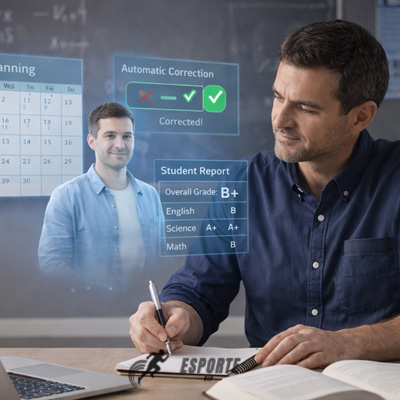
Teaching today involves balancing instruction, assessment, documentation, and communication.
IA for teachers integrates into this reality by assisting with tasks that demand analysis, organization, and repetition.
AI systems process classroom data to reveal learning trends, highlight gaps, and support instructional adjustments.
This allows teachers to respond earlier to difficulties instead of waiting for summative assessments.
Most importantly, AI works under teacher supervision. Educators decide how insights are used, preserving professional autonomy and accountability.
Everyday Teaching Problems Addressed by IA for Teachers 🧠
Many challenges faced by teachers are systemic. IA for teachers helps address these issues by reducing manual workload and increasing instructional visibility.
Common problems improved through AI-supported solutions include:
• Excessive time spent grading and organizing feedback
• Difficulty adapting lessons for different learning levels
• Limited insight into student progress between assessments
• Administrative overload that reduces instructional creativity
By easing these pressures, AI allows teachers to focus on pedagogy rather than logistics.
Planning Lessons More Efficiently With IA for Teachers ✏️
Lesson planning requires alignment, differentiation, and pacing. IA for teachers supports this process by generating structured lesson drafts aligned with standards and classroom context.
AI planning tools analyze curriculum documents, pacing guides, and previous results to suggest lesson sequences, activities, and learning checkpoints.
Teachers maintain full editorial control, adjusting outputs to match their teaching style.
This approach reduces preparation time while improving lesson coherence.
How AI Improves Lesson Planning Workflows 🧩
| AI Capability | Core Function | Benefit for Teachers |
| Curriculum alignment | Links objectives to standards | Fewer planning gaps |
| Smart pacing | Adjusts timing suggestions | Better content retention |
| Resource discovery | Recommends materials | Less research time |
Assessment and Feedback Powered by IA for Teachers 📊
Assessment is a critical application of IA for teachers. AI tools analyze responses, identify patterns, and organize results far more efficiently than manual grading.
Teachers receive structured insights that support faster intervention and more consistent feedback. Rather than replacing evaluation, AI enhances awareness, helping educators adjust instruction before misunderstandings solidify.
This strengthens formative assessment practices and supports mastery-based learning models.
Ways AI Strengthens Assessment and Feedback 📈
| Assessment Focus | AI Contribution | Classroom Result |
| Formative checks | Instant analysis | Faster corrections |
| Writing evaluation | Pattern detection | Clearer feedback |
| Progress tracking | Long-term organization | Targeted teaching |
AI Platforms That Effectively Support Teachers 🤖
To fully understand IA for teachers, it is essential to examine the AI platforms already integrated into teaching practice.
These tools are designed to assist educators, not replace instruction.
ChatGPT Supporting Instructional Thinking 🗣️
ChatGPT is widely used by teachers as a cognitive support tool.
Under teacher guidance, it helps generate lesson ideas, simplify explanations, create differentiated activities, and design formative questions.
Educators use it to refine materials while retaining full responsibility for content accuracy and pedagogy.
MagicSchool AI Streamlining Teacher Workflows 🏫
MagicSchool AI focuses specifically on educators. It supports lesson planning, rubric creation, assessments, IEP documentation, and classroom resources aligned with standards.
Its strength lies in reducing preparation time without removing pedagogical control, making it a strong example of applied ia for teachers.
Khanmigo Reinforcing Guided Learning 📚
Khanmigo, developed by Khan Academy, operates as a curriculum-aligned AI tutor. It guides students through problem-solving processes while reinforcing conceptual understanding.
Teachers use it to complement instruction and maintain alignment with learning objectives.
Gradescope Enhancing Grading Consistency ⚙️
Gradescope applies AI to organize grading workflows. It groups similar answers, supports consistent rubric application, and reduces grading time.
Teachers remain fully responsible for scores and feedback, while AI accelerates repetitive steps.
Diffit Supporting Differentiation and Inclusion 📖
Diffit adapts texts to different reading levels and learner profiles.
Teachers can instantly generate multiple versions of the same material, supporting differentiated instruction without redesigning entire lessons.
This makes Diffit particularly valuable in inclusive classrooms.
How These AI Tools Assist Teachers Daily 🧠
| AI Tool | Primary Role | Value for Teachers |
| ChatGPT | Instructional support | Faster planning |
| MagicSchool AI | Workflow optimization | Higher efficiency |
| Khanmigo | Guided practice | Stronger comprehension |
| Gradescope | Grading assistance | Reduced workload |
| Diffit | Text adaptation | Inclusive instruction |
Inclusive Teaching Supported by IA for Teachers ♿
Inclusion is a foundational goal in education. IA for teachers supports accessibility by providing adaptive tools that address diverse learning needs within a shared classroom environment.
AI-powered features assist students with disabilities, language barriers, and learning differences, allowing teachers to meet diverse needs without isolating learners.
How AI Improves Accessibility in Classrooms 🌍
| Learning Need | AI Feature | Educational Impact |
| Language diversity | Real-time translation | Higher engagement |
| Reading challenges | Adaptive text levels | Improved comprehension |
| Motor limitations | Speech-to-text | Equal participation |
Ethical Foundations of IA for Teachers Use ⚖️
Ethical responsibility is central to ia for teachers. Transparency, data protection, and human oversight are essential principles.
Teachers must understand how AI tools function and apply them critically. Compliance with FERPA and district policies ensures student data protection and maintains trust.
AI remains a support mechanism rather than an authority.
The Sustainable Future of Education With IA for Teachers 🌱
The long-term value of ia for teachers lies in sustainability. When thoughtfully implemented, AI reduces burnout, improves instructional quality, and supports adaptable education systems.
Teachers gain clarity and time, students benefit from personalized learning, and schools evolve without losing their human-centered mission.
Technology strengthens teaching instead of replacing it.
FAQ ❓
- How can teachers begin using AI responsibly?
- Start with education-focused tools and maintain teacher control over instructional decisions.
- Does AI change the role of the teacher?
- AI supports efficiency and insight, but teaching remains a human profession.
- Are AI platforms safe for student data?
- Reputable tools follow U.S. education data protection regulations.
- Can AI support differentiated instruction?
- Yes. Many tools adapt content and pacing for diverse learners.
- What skills do teachers need to work with AI?
- AI literacy, ethical judgment, and critical evaluation skills.
