
Transform Your Classroom Efficiency With an AI Teacher Assistant Today
Before adopting an ai teacher assistant, explore real classroom applications, implementation strategies, cost analysis, and long-term benefits to make the smartest educational investment.
The modern classroom is evolving rapidly, and the ai teacher assistant has become one of the most powerful tools available to educators across the United States.
Designed to support lesson planning, grading, content personalization, and communication, this technology helps teachers reclaim valuable time while improving instructional quality.
Rather than replacing educators, AI enhances their ability to focus on mentorship, creativity, and student connection.
Discover how ai photo editor for photographers are reshaping professional photography businesses across the United States.
How an AI Teacher Assistant Improves Lesson Planning and Curriculum Design 📚
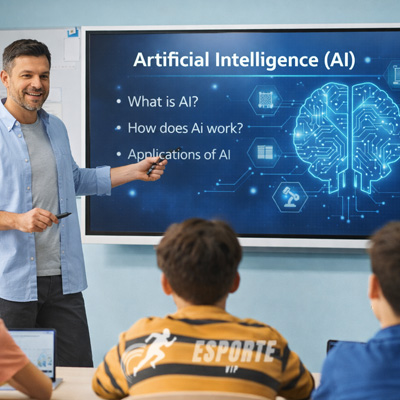
One of the most immediate advantages of an ai teacher assistant is streamlined lesson planning.
Teachers often spend hours building structured lesson outlines, aligning standards, and differentiating content.
AI systems can generate customizable lesson frameworks in minutes, allowing educators to refine and personalize rather than build from scratch.
With curriculum alignment capabilities, the ai teacher assistant can adapt lessons to Common Core or state-specific standards.
It can also modify reading levels, generate discussion prompts, and create extension activities for advanced learners. This reduces preparation time while maintaining instructional quality.
Curriculum Automation Capabilities of an AI Teacher Assistant 🧠
Key instructional planning functions include:
- Generating weekly and monthly lesson plans
- Aligning objectives to state standards
- Creating differentiated reading materials
- Suggesting project-based learning activities
- Building formative assessment prompts
AI Teacher Assistant for Grading, Feedback, and Assessment Efficiency 📝
Grading remains one of the most time-consuming responsibilities in education.
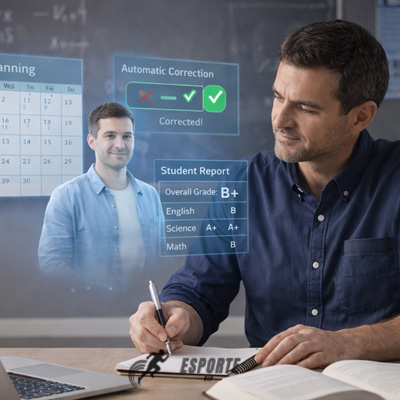
The ai assistant significantly reduces grading hours by analyzing essays, quizzes, and structured responses with rubric-based scoring.
Rather than replacing teacher judgment, AI provides preliminary feedback, highlighting grammar issues, structural inconsistencies, and clarity concerns.
Teachers can then refine and personalize comments before submission. This collaborative grading model maintains academic integrity while increasing efficiency.
| Feature | Classroom Benefit | Time Saved Per Week (Est.) |
| Essay Pre-Grading | Faster feedback cycles | 4–6 hours |
| Quiz Auto-Scoring | Immediate performance analysis | 2–3 hours |
| Rubric Alignment | Consistent grading criteria | 1–2 hours |
| Progress Analytics | Identify struggling students | 1–2 hours |
Personalized Learning With an AI Teacher Assistant in Diverse Classrooms 🎯
Personalization has become central to effective education. A well-implemented ai assistant adapts assignments to individual learning speeds and comprehension levels.
In classrooms with varied reading abilities, AI tools can instantly generate leveled versions of the same lesson.
This flexibility ensures that struggling students receive simplified explanations while advanced learners encounter enriched material.
The ai teacher assistant can also suggest alternative teaching approaches based on performance data, improving inclusivity and accessibility.
Student-Centered Customization Tools ⚙️
Core personalization features include:
- Adaptive reading levels
- Customized practice exercises
- Multilingual support for ESL learners
- Real-time performance tracking
- Individualized homework generation
By supporting differentiation, the ai assistant strengthens engagement and academic confidence across diverse student populations.
Cost Analysis and Implementation Strategy for an AI Teacher Assistant 💵
Adopting an ai assistant requires strategic budgeting and infrastructure evaluation.
Pricing varies depending on platform sophistication, district licensing agreements, and integration complexity.
Below is a simplified cost comparison for implementation in U.S. school environments:
AI Teacher Assistant Cost Projection 📊
| Implementation Model | Est. Annual Cost | Key Benefits |
| Basic SaaS Platform | $200–$400 | Lesson planning + grading |
| Advanced AI Suite | $500–$1,000 | Analytics + personalization |
| District-Wide License | Negotiated ($50K–$250K+) | Full integration + training |
Implementation Roadmap for Schools 🗂️
Successful integration typically includes:
- Infrastructure evaluation
- Teacher training sessions
- Pilot classroom rollout
- Performance monitoring
- Full-scale implementation
When schools approach adoption strategically, the ai assistant enhances productivity without disrupting classroom culture.
AI Teacher Assistant Versus Traditional Teaching Support Tools ⚖️
Before AI integration, educators relied on static digital resources, templates, and manual grading systems.
The ai assistant differs by actively learning from usage patterns and adapting suggestions accordingly.
Unlike conventional software that simply stores materials, AI tools analyze instructional trends, student engagement metrics, and performance indicators.
This makes the ai assistant a dynamic support system rather than a passive database.
Understand the benefits of artificial intelligence from a systems perspective, focusing on how AI reshapes processes and decisions.
Comparative Efficiency Overview 📊
| Feature | Traditional Tools | AI Teacher Assistant |
| Lesson Generation | Manual | Automated + Customizable |
| Essay Feedback | Teacher-only | AI + Teacher refinement |
| Data Analytics | Limited | Real-time dashboards |
| Personalization | Manual differentiation | Automated adaptation |
Why the AI Teacher Assistant Is Reshaping Modern Education 🚀
The ai teacher assistant represents a structural shift in educational methodology. Rather than adding complexity, it reduces repetitive administrative work and enhances analytical insight.
Teachers regain time to mentor students, refine pedagogy, and develop creative projects.
In districts facing teacher shortages and rising administrative pressure, AI support systems provide scalable efficiency.
When paired with professional training and ethical oversight, the ai assistant strengthens academic outcomes without compromising human interaction.
As educational environments continue to digitize, adopting an ai assistant becomes less of a technological experiment and more of a strategic necessity.
Schools that implement AI thoughtfully gain measurable advantages in productivity, personalization, and instructional quality.
FAQ ❓
- Is an ai teacher assistant meant to replace teachers?
- No, it is designed to support educators by automating repetitive tasks and enhancing efficiency.
- Can an assistant grade essays accurately?
- It provides preliminary scoring and structured feedback, but teachers maintain final evaluation control.
- Is an assistant expensive for individual teachers?
- Entry-level platforms are relatively affordable, while district-wide systems require larger investment.
- Does an assistant improve student outcomes?
- When used effectively, it enhances personalization, feedback speed, and data-driven instruction.
- Is training required to use?
- Yes, proper onboarding ensures teachers maximize features without disrupting classroom flow.
