
SOC as a Service providers show their pricing and what's included
Comparing SOC as a Service providers before signing a contract helps avoid paying for monitoring coverage a business doesn’t actually need.
Before moving on, a quick detour: AI for Qualitative Research explains how artificial intelligence can support coding, analysis, and academic research.
This guide explains what SOC as a Service means, presents common pricing ranges, lists core features to expect, and helps decide which tier of coverage fits a given business size.
How SOC as a Service providers deliver managed detection? 🔎
SOC as a Service (Security Operations Center as a Service) outsources continuous monitoring, threat detection and incident response to a third-party provider, instead of a company building and staffing its own internal security operations center.
Providers typically combine automated detection tools with human analysts who review alerts around the clock.
For those also exploring pickup options, the Subaru Impreza vontinues to be one of the smartest choices on the road.
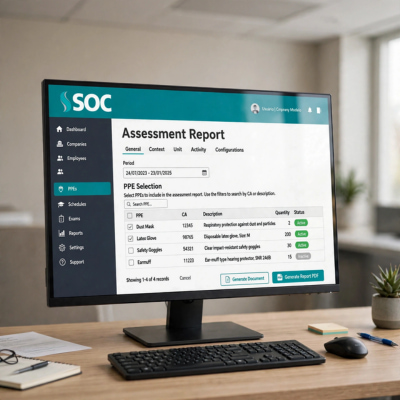
SOC as a Service providers pricing, coverage and service tiers 💰
SOC as a Service providers typically price their plans based on the number of monitored endpoints, data volume ingested, or hours of coverage (business hours versus 24/7), with quotes varying significantly by provider and by the complexity of a company’s IT environment.
Because pricing is usually customized rather than published as a flat rate, the exact cost should be requested directly from each provider before comparing options.
| Coverage level | Typical scope | Best suited for | Example provider or pricing reference |
| Entry monitoring | Endpoint detection, alert triage and limited response during a defined scope; pricing often starts around US5–US25 per endpoint/month | Small businesses with a limited number of endpoints and basic monitoring needs | Huntress Managed EDR: US$7.99 per endpoint/month for 100 endpoints |
| Managed detection and response | 24/7 monitoring, human investigation, threat detection and guided or active remediation | Small and mid-sized companies without a fully staffed internal SOC | Huntress includes 24/7 SOC monitoring and response in its managed products |
| SOCaaS with multi-source monitoring | 24/7 monitoring across endpoints, networks, cloud services and other log sources, with alert triage and incident-response guidance | Mid-sized organizations and businesses with hybrid environments | Fortinet SOCaaS supports Fortinet and third-party data sources; one service option covers 1 GB/day of logs |
| Premium SOCaaS | Continuous monitoring, threat hunting, advanced analytics, compliance reporting, incident response and dedicated support | Larger or regulated organizations with complex environments | Pricing is generally customized according to assets, log volume, integrations and response requirements |
The prices shown are public reference points, not standardized market tiers. Huntress publishes example pricing based on 100 units, while Fortinet presents SOCaaS as a subscription whose final cost depends on the selected service, data sources and coverage scope.
Confirm onboarding, integrations, response authority, data retention, service-level agreements and taxes before comparing proposals.
Vendor comparison checklist 📋
| Question | Why it matters within the service model |
| Is coverage limited to business hours or available 24/7? | It determines when alerts are actively reviewed |
| Is incident response included or sold separately? | Monitoring alone does not define the full response scope |
| Is pricing based on endpoints, data volume or coverage? | Quotes can look similar while measuring different usage |
| How often are reports delivered? | Reporting makes the outsourced activity visible to the client |
| Are threat hunting or compliance reports part of the tier? | Advanced functions may sit above the basic package |
The three service levels in the first table should therefore be treated as scopes, not standardized products.
A small business may only need defined-hours monitoring, while a larger environment can require continuous coverage and response.
Comparing proposals line by line prevents a lower quote from appearing equivalent when it excludes a service that another provider includes.
The written scope should also connect each alert to the expected response and report, so the buyer can see what happens after detection instead of comparing monitoring labels alone.
Core monitoring, response and reporting capabilities ⚙️
Common features include real-time threat detection, log analysis across multiple systems, incident response support, and regular reporting on security posture. More advanced tiers may add threat hunting and compliance-focused reporting for regulated industries.
Outsourced SOC versus an in-house security team 📊
Businesses can also build an in-house SOC, which usually requires a larger upfront investment in staffing and tools compared to an outsourced service.
The choice between building in-house versus outsourcing typically depends on company size, budget, and the complexity of the systems that need monitoring.
Which organizations gain the most value ✅
SOC as a Service tends to make the most sense for companies that need continuous security monitoring but don’t have the budget or scale to justify an in-house team.
Very small businesses with minimal digital exposure might not need full 24/7 coverage yet. Before investing in security tooling, it’s also worth reviewing the MLS All-Star game schedule for a change of pace.
A scope-first way to compare providers 🔎
Managed security quotes become meaningful only when each vendor is asked to cover the same environment and responsibilities.
A tier name does not establish whether monitoring hours, response work and reporting are equivalent.
- Define the systems or endpoints included in scope.
- State the hours during which active monitoring is required.
- Identify who investigates, contains and communicates an incident.
- Confirm the reports and review cadence included in the service.
- Separate core coverage from threat hunting or compliance add-ons.
- Keep contract length and usage assumptions consistent.
This structure also makes the relationship with an internal team clearer. The provider can perform defined monitoring and response activities, but the client still needs ownership of access, business decisions and agreed escalation steps.
Comparing the written scope instead of marketing labels reveals what happens after an alert and which tasks remain with the organization.
Price can then be read against an operational service rather than an undefined promise of protection.
FAQ ❓
- What is SOC as a Service?
- It’s an outsourced security monitoring service that provides continuous threat detection and incident response without building an in-house security operations center.
- How much does SOC as a Service cost?
- Pricing varies by provider based on endpoints monitored, data volume and coverage hours; quotes should be requested directly from each provider.
- Is SOC as a Service better than an in-house SOC?
- It depends on company size and budget; outsourcing usually requires less upfront investment, while an in-house team offers more direct control.
- What should I check before signing with a SOC provider?
- Response time guarantees, coverage hours, and reporting frequency; for general guidance on evaluating service contracts, see FTC Consumer Advice.
- Does SOC as a Service replace a company’s own IT team?
- No, it typically complements internal IT staff by handling continuous monitoring and initial incident response, while internal teams manage overall infrastructure.
