
2027 FIFA Women’s World Cup: Host Cities, Stadiums, Format and Tournament Preview
The 2027 FIFA Women’s World Cup will mark a major milestone in the history of the competition.
Brazil will become the first South American country to host the tournament, bringing the women’s game to a region known worldwide for its deep connection to football.
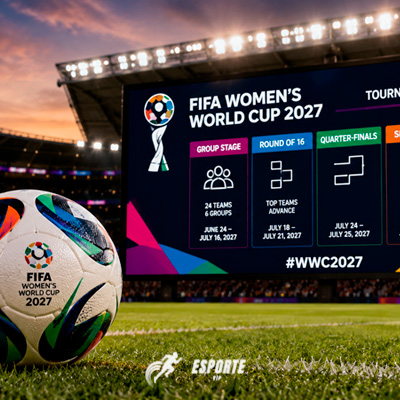
The event is scheduled to take place from June 24 to July 25, 2027, with 32 national teams competing across eight host cities.
Brazil’s existing stadium network, international tourism experience, and passionate fan culture are expected to create one of the most distinctive editions of the tournament.
Explore how the 2030 World Cup is set to reshape international football. More than a tournament, it will be a worldwide celebration.
Why the 2027 Women’s World Cup Will Be Historic 🌎
The tournament will be the first FIFA Women’s World Cup played in South America.
That distinction gives the competition special importance because the region has produced generations of world-class players while continuing to expand investment.
Hosting the tournament in Brazil also gives FIFA an opportunity to reach new audiences across Latin America.
The event will be the tenth edition of the FIFA Women’s World Cup and Brazil’s first time organizing the women’s competition.

Brazil’s Importance as Host Nation 🇧🇷
Brazil offers several major advantages as host.
The country has extensive experience organizing international sporting events, including the men’s World Cup and the Olympic Games.
It also possesses large stadiums, major airports, established tourism infrastructure, and cities with strong football identities.
Most importantly, the tournament will take place in a country where football is deeply connected to everyday culture.
Tournament Dates and Competition Calendar 📅
The 2027 Women’s World Cup is scheduled to begin on June 24 and conclude on July 25.
The month-long calendar will include the group stage, knockout rounds, semifinals, third-place playoff, and final.
Rest days will be distributed throughout the competition to support player recovery and team travel between host cities.
The official match schedule and group-stage draw will be confirmed closer to the tournament. The competition should follow a structure similar to recent editions:
- Group stage
- Round of 16
- Quarterfinals
- Semifinals
- Third-place match
- Final
A total of 64 matches are expected to be played.
The 32-Team Format Will Continue on 2027 Women’s World Cup ⚽
The 2027 FIFA Women’s World Cup will retain the 32-team format used in 2023.
The participating nations will be divided into eight groups of four teams.
Every team will play three group-stage matches, with the top two nations in each group advancing to the Round of 16.
From that point forward, the competition becomes single elimination.
How Teams Advance From the Group Stage 📊
Group standings are determined by factors such as:
- Points earned
- Goal difference
- Goals scored
- Head-to-head results
- Additional FIFA tiebreaking criteria
Teams must combine consistency with efficiency because one poor result can significantly affect qualification chances.
Eight Brazilian Cities Will Host Matches 🏙️
The tournament will be distributed across eight cities representing different regions of Brazil.
The confirmed host cities are:
- Rio de Janeiro
- São Paulo
- Belo Horizonte
- Brasília
- Fortaleza
- Porto Alegre
- Recife
- Salvador
This geographic variety will allow visiting supporters to experience different climates, traditions, cuisines, and local football cultures.
Stadiums Expected to Stage the 2027 Women’s World Cup Tournament 🏟️
The competition will use eight established stadiums.
The proposed venue list includes:
- Maracanã
- Arena Corinthians
- Mineirão
- Mané Garrincha
- Arena Castelão
- Beira-Rio
- Arena Pernambuco
- Arena Fonte Nova
These venues were built or modernized for previous international competitions, reducing the need for large-scale new stadium construction.
The Maracanã and the Tournament Final 🏆
The Maracanã is expected to play one of the most important roles during the tournament.
As one of the most famous football stadiums in the world, it provides a symbolic setting for the final. Its history, capacity, and atmosphere make it a natural centerpiece for the competition.
Hosting the championship match in Rio de Janeiro would connect women’s football with one of the sport’s most iconic venues.
Qualification for the 2027 Women’s World Cup ✅
Brazil qualifies automatically as host nation.
The remaining 31 places will be distributed through qualifying competitions organized by FIFA’s continental confederations.
Europe, Africa, Asia, South America, North America, and Oceania will each receive direct qualification places, while additional teams may reach the tournament through playoffs.
Qualification will continue through 2026 and into the early stages of 2027. The qualification process involves:
- UEFA
- CONMEBOL
- CONCACAF
- AFC
- CAF
- OFC
Each confederation uses its own tournament or qualifying structure to determine participants.
Watch Norway vs England live with lineups, TV channels, tactical analysis, predictions, and full FIFA World Cup 2026 quarterfinal coverage.
Nations Expected to Challenge for the Trophy 🥇
Several countries are likely to arrive as leading contenders.
Spain will be expected to remain among the strongest teams because of its technical style and deep player pool.
The United States will attempt to return to the top after rebuilding around a new generation, while England, Canada, Australia, and Brazil should also enter with serious ambitions.
The competition is expected to be more balanced than ever.
Why the Tournament Could Be Highly Competitive 📈
Women’s international football has grown rapidly across multiple continents.
More national teams now possess professional leagues, advanced youth systems, specialized coaching, and improved sports science.
As a result, the gap between traditional powers and emerging nations has become smaller. Unexpected results are increasingly common, especially during the group stage.
Brazil’s Chances as the Host Nation 🇧🇷
Brazil will carry enormous expectations in front of home supporters.
The national team has produced many of the greatest players in women’s football history, yet the senior team is still chasing its first World Cup title.
Hosting the tournament creates both an opportunity and additional pressure.
Brazil’s performance will likely depend on tactical organization, squad depth, defensive consistency, and the ability to transform home support into positive energy.
Brazilian Players Who Could Be Important ⭐
Potential key names include:
- Debinha
- Kerolin
- Gabi Portilho
- Adriana
- Tarciane
- Antônia
Additional young players are expected to emerge before the final squad is selected.
International Stars Expected to Headline the 2027 Women’s World Cup 🌟
The 2027 tournament should feature many of the world’s leading players.
Possible headline names include Aitana Bonmatí, Sophia Wilson, Caroline Graham Hansen, and several rising talents from Europe, Africa, Asia, and the Americas.
Player availability will ultimately depend on form, fitness, and national-team selection closer to kickoff.
Young Players Could Define the Competition 🚀
The tournament may also introduce a new generation of global stars.
Players currently in youth systems or at the beginning of their professional careers will have several years to develop before 2027.
As a result, some of the event’s most important names may still be relatively unknown today.
World Cups often accelerate the international recognition of young talent.
Infrastructure and Tournament Preparation 🏗️
Brazil already possesses most of the major stadium infrastructure required for the event.
Preparation will therefore focus on modernization, security, accommodation, and matchday operations rather than constructing an entirely new stadium network.
This may allow organizers to direct more attention toward the fan experience and long-term development of women’s football.
Organizers are expected to focus on:
- Stadium upgrades
- Training facilities
- Public transportation
- Airport operations
- Security planning
- Volunteer programs
- Media infrastructure
- Accessibility services
Successful coordination across all eight cities will be essential.
2027 Women’s World Cup Potential Legacy 🌱
The long-term impact of the 2027 FIFA Women’s World Cup could be as important as the matches themselves.
Brazil hopes the tournament will increase participation among girls, strengthen domestic competitions, and attract additional sponsorship to women’s football.
A successful event could influence the sport throughout South America.
Learn how the greatest World Cup champions earned their place in football history and what it truly takes to become a champion.
How the Tournament Could Support Women’s Football 📣
Potential benefits include:
- Greater youth participation
- Increased visibility for women athletes
- Stronger domestic leagues
- Improved training infrastructure
- More commercial investment
- Wider television coverage
- New professional opportunities
The true legacy will depend on what happens after the final whistle.
What Makes the 2027 Women’s World Cup Different? 🚀
The 2027 FIFA Women’s World Cup will stand out because it brings the tournament to South America for the first time.
Its combination of 32 national teams, established stadiums, passionate supporters, global stars, and Brazil’s unique football culture creates the conditions for a memorable competition.
Beyond determining a champion, the tournament could reshape the future of women’s football across Brazil and the wider continent.
FAQ
1. Where will the 2027 FIFA Women’s World Cup be held?
- Brazil will host the tournament across eight cities: Rio de Janeiro, São Paulo, Belo Horizonte, Brasília, Fortaleza, Porto Alegre, Recife, and Salvador.
2. When will the tournament take place?
- The competition is scheduled from June 24 to July 25, 2027.
3. How many teams will participate?
- Thirty-two national teams will compete in eight groups of four.
4. Which stadium is expected to host the final?
- The Maracanã in Rio de Janeiro is expected to stage the championship match.
5. Why is the 2027 Women’s World Cup historic?
- It will be the first FIFA Women’s World Cup hosted in South America and the first edition organized by Brazil.
