
Motorcycle Financing: Discover How to Finance Your Next Bike and Compare the Best Loan Strategy for Your Budget
Explore motorcycle financing, understand how rates, loan terms, and down payments affect your costs, and discover smarter ways to finance your next motorcycle.
Financing can make purchasing a new or used bike more accessible by spreading the cost across monthly payments instead of requiring the entire purchase price upfront.
However, the right financing strategy involves more than finding the smallest monthly installment.
Riders should compare interest rates, loan terms, down payments, lender requirements, motorcycle prices, and total repayment costs.
Compare motorcycle loans options, understand loan costs, and choose a payment plan that works for your budget.
How Motorcycle Financing Works When You Are Ready to Buy a Bike 🏍️
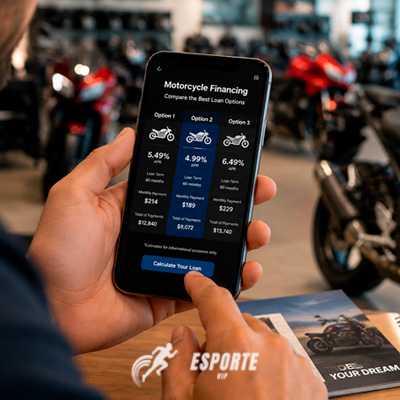
Financing generally involves borrowing money to purchase an eligible motorcycle and repaying the balance, plus interest, over an agreed period.
The exact structure depends on the lender, the borrower’s financial profile, and the motorcycle being purchased.
Some buyers arrange financing before visiting a dealership, while others explore financing during the purchase process.
Banks, credit unions, online lenders, dealership networks, and specialized powersports lenders can all represent potential sources depending on availability and eligibility.
The important point is to compare the complete financing agreement.
A low monthly payment may appear attractive, but an extended repayment term can substantially increase the total amount spent.

Four Motorcycle Financing Sources Riders Can Explore 🔎
Buyers can potentially research:
- Banks — Traditional financial institutions may offer vehicle or recreational loans.
- Credit unions — Eligible members can explore motorcycle financing programs with institution-specific requirements.
- Online lenders — Digital application processes can make researching potential loan options more convenient.
- Dealership and powersports financing — Motorcycle dealerships may connect buyers with manufacturer-affiliated or third-party providers.
No single financing source is automatically best for every rider.
Comparing several options can provide a clearer understanding of potential APRs, repayment periods, and approval requirements.
What Determines Your Motorcycle Loan Rate and Approval? 💰
Lenders can evaluate several factors when reviewing a financing application. Credit history may play an important role, but it is not necessarily the only consideration.
Income, existing financial obligations, requested loan amount, down payment, and motorcycle value may also influence the decision.
Requirements differ between lenders, meaning an applicant’s available options can vary considerably.
The motorcycle itself can matter as well.
Financing a new model from a dealership may involve different conditions from purchasing an older used motorcycle through a private-party transaction.
Motorcycle Models and Categories to Consider Before Financing 🛣️
The motorcycle market offers bikes at dramatically different price points. A lightweight beginner model creates a very different financing scenario.
Understanding the category that matches your riding experience and intended use can prevent you from financing more than you actually need.
A beginner may benefit more from an affordable, manageable motorcycle than immediately purchasing a large premium machine.
Experienced riders planning extensive touring may find the additional cost of comfort and touring equipment more justifiable.
The strongest purchase matches riding skill, intended use, and financial capacity.
New Versus Used Motorcycle Financing Can Produce Different Results ⚖️
Buying new can provide access to current technology, manufacturer warranty coverage, and a motorcycle without previous ownership history.
However, the initial purchase price can be higher.
A used motorcycle may reduce the amount that needs to be financed, but buyers should evaluate condition carefully.
Tires, brakes, chain and sprockets, fluids, battery condition, and maintenance history can influence the real cost of a used bike.
Explore smart ways to reduce motorcycle loan refinance costs and discover how refinancing can improve your monthly budget.
New and Used Motorcycle Comparison 🔧
New motorcycle advantages:
- New-vehicle warranty coverage
- No previous rider history
- Current technology
- Potential manufacturer financing programs
Used motorcycle advantages:
- Potentially lower purchase price
- Reduced initial financing requirement
- Previous depreciation already absorbed
- Access to higher-level models at lower prices
Used-bike buyers should consider a professional inspection when appropriate, especially when purchasing from a private seller.
Remember the Costs Beyond Your Motorcycle Payment 🧤
A common mistake with financing is calculating affordability based only on the monthly loan payment. Owning and riding a motorcycle involves several additional expenses.
Insurance can vary considerably based on motorcycle type, rider profile, location, and coverage.
Sport and premium motorcycles can produce a different insurance cost than smaller commuter bikes.
Riders should also budget for:
- Motorcycle insurance
- Helmet and protective equipment
- Jacket, gloves, boots, and riding pants
- Routine maintenance
- Tires
- Fuel
- Registration
- Storage when necessary
- Unexpected mechanical repairs
Calculating these expenses before financing can help establish a more realistic budget.
Common Motorcycle Financing Mistakes Riders Should Avoid ⚠️
One of the biggest mistakes is selecting a motorcycle based entirely on the maximum amount a lender may approve.
Financing eligibility does not automatically determine comfortable affordability. Another mistake is focusing exclusively on monthly payments.
Extending a motorcycle loan for many years can make an expensive bike appear affordable while substantially increasing the total repayment amount.
Buyers should also avoid ignoring insurance costs. Obtaining an insurance estimate before purchasing can prevent unexpected expenses.
Finally, carefully consider your riding experience. Financing a powerful or heavy motorcycle simply because it is available may not be the safest or most practical choice.
Discover motorcycle guaranteed tips that can help reduce monthly payments and improve approval chances.
Build a Motorcycle Financing Plan That Fits Your Riding Goals 🚀
The right motorcycle financing strategy should help you purchase a bike that matches both your riding ambitions and financial situation.
Begin by determining which motorcycle category fits your experience and intended use, then establish a complete budget that includes the purchase price and fuel.
Compare financing possibilities from available banks, credit unions, online lenders, and dealership or powersports financing sources instead of evaluating only one offer.
A shorter repayment period may reduce long-term interest costs, while a reasonable down payment can decrease the amount financed.
Most importantly, choose a motorcycle you can comfortably own throughout the entire loan period.
The best financing decision is not necessarily the one that puts the most expensive bike in your garage—it is the one that allows you to enjoy riding.
FAQ ❓
1. How does financing work?
- Motorcycle financing generally allows a buyer to borrow money for an eligible bike and repay the loan, through scheduled payments over an agreed term.
2. Where can I look for financing?
- Potential options can include banks, and specialized powersports financing providers, depending on eligibility and availability.
3. Is financing a used motorcycle possible?
- Yes, some lenders finance eligible used motorcycles, although requirements involving model year, mileage, value, condition, and purchase source can vary.
4. Should I make a down payment?
- A down payment can reduce the amount financed and potentially lower borrowing costs, but riders should also maintain sufficient savings for emergencies.
5. What should I compare before accepting?
- Compare APR, loan duration, monthly payment, total repayment, fees, down payment requirements and other ownership expenses before committing to a loan.
